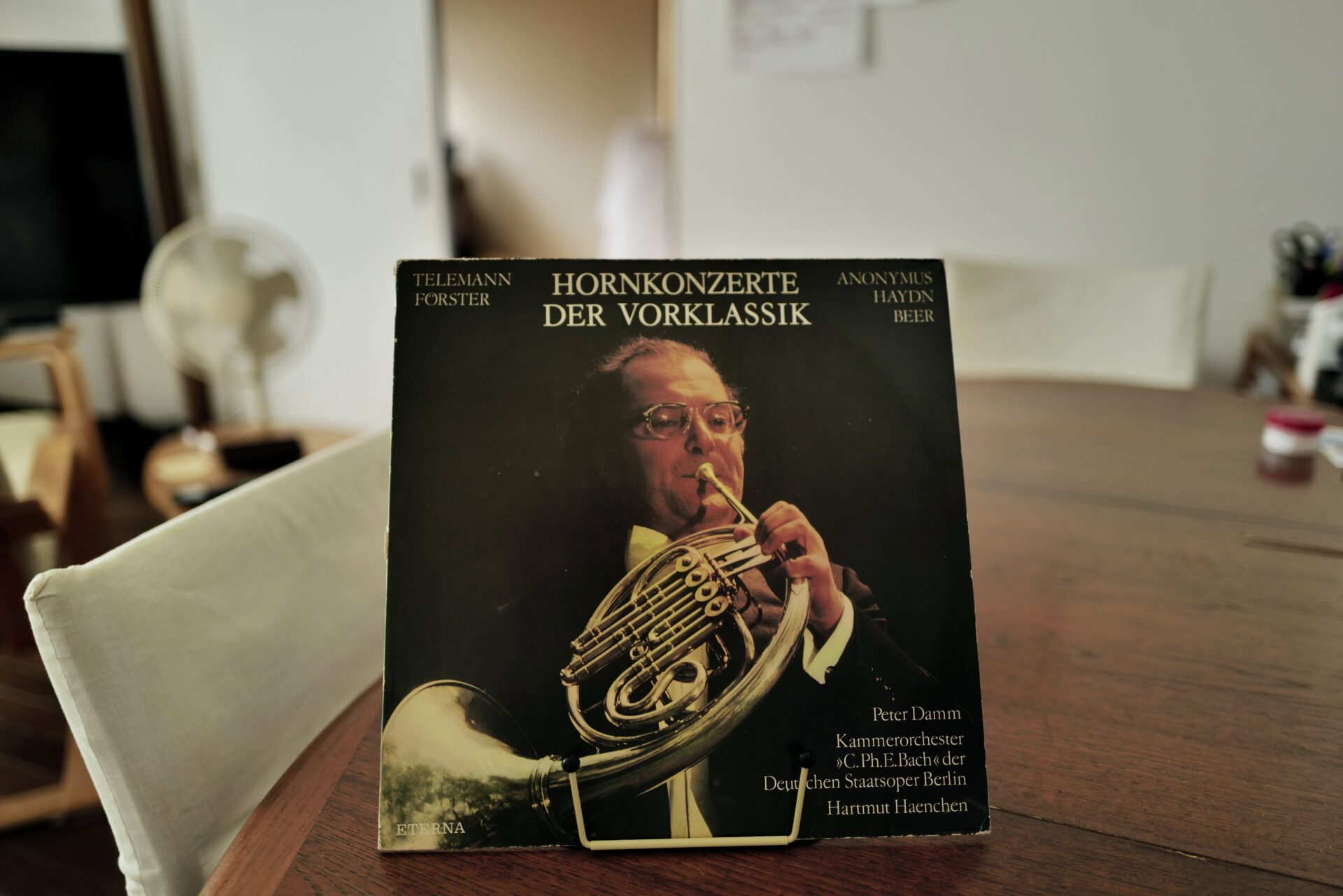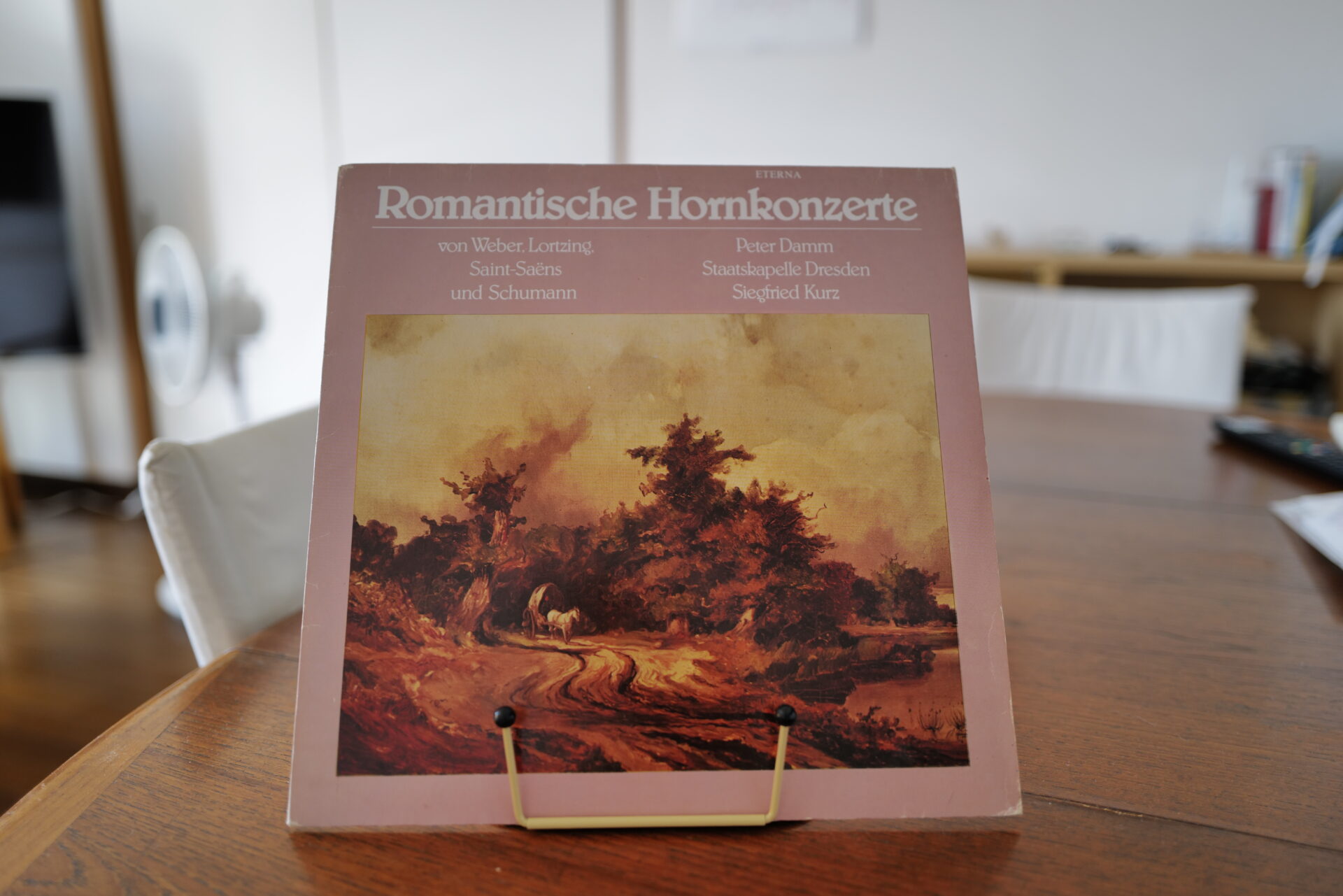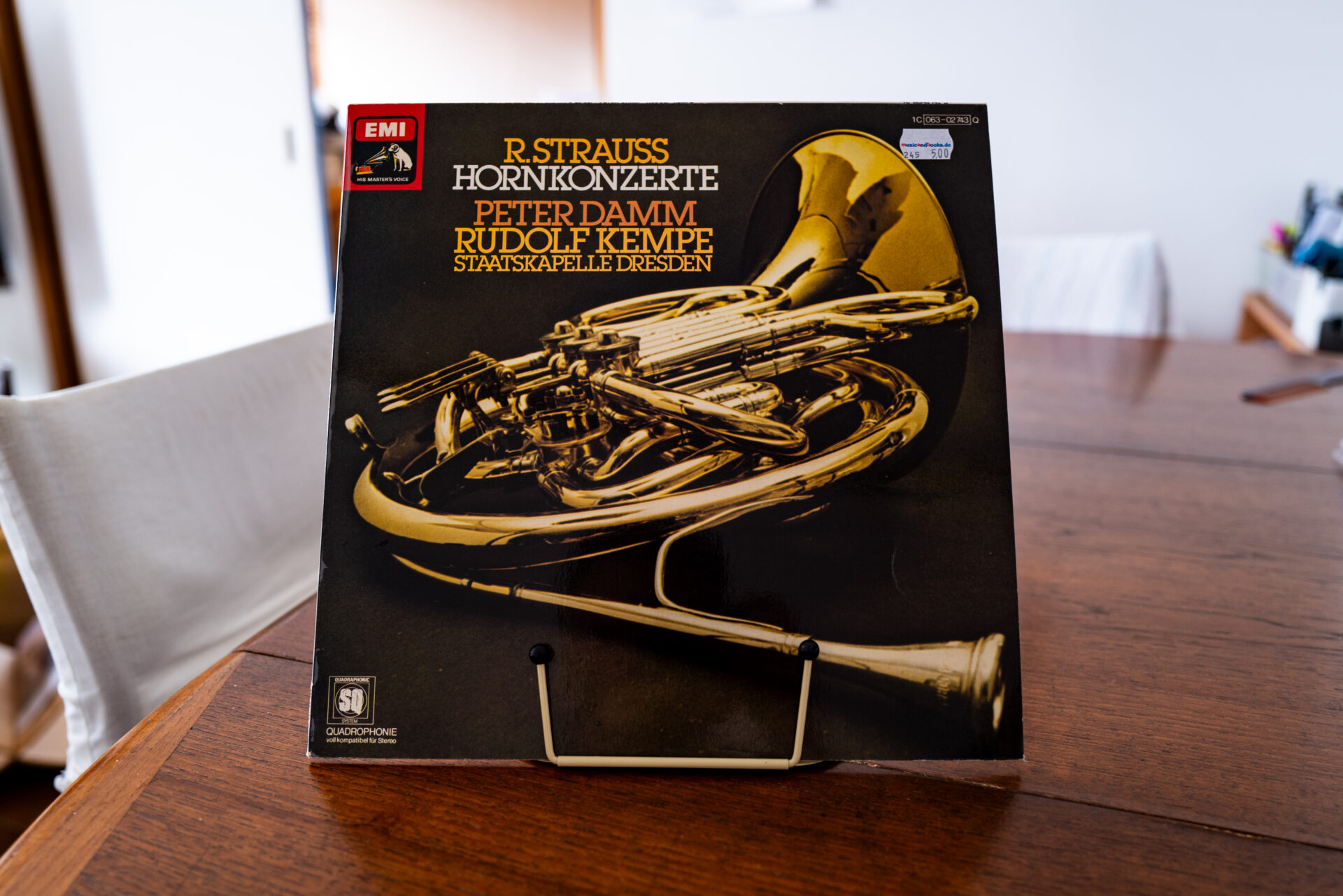
My Master has been in a particularly good mood lately. On top of that, he’s decided “I need to diet before my health check-up!” and has been taking me on walks far more often. I’m grateful, of course — but it does mean I have less time to sneak a listen to records while he’s out, and the blog has been falling behind. This simply won’t do. As they say, “Peter Damm’s art is long, and our life is short” — “Peter Damms Kunst ist lang und kurz ist unser Leben.”
Today I would like to introduce the Richard Strauss Horn Concerto — a work that has become virtually synonymous with Peter Damm’s name. There is no shortage of commentary on this piece, so I won’t repeat too much of what’s already been said. What I will note is that the “No. 1” I am featuring today was composed when Strauss was just 18 (!) years old.
Yet for a teenage work, it shows not a trace of immaturity. It is one of the most frequently performed and extensively recorded of all horn concertos — and for good reason.
There are many horn players who perform this concerto with power and technical brilliance. But I believe it was Peter Damm who played it most beautifully, and who sang through it most completely.


About the Performers and Recording
Conductor: Rudolf Kempe
Orchestra: Staatskapelle Dresden
Recording Engineer: Claus Strüben
Recorded: September 1975 (Peter Damm, age 38) Venue: Lukaskirche, Dresden
Highlights to Listen For
According to his official website, Peter Damm first performed this concerto in 1957 at the age of 20. He gave his 111th performance under Herbert Blomstedt, and his 157th during a concert tour in Osaka in 2000. Some sources put the total at over 170 performances. Whatever the precise number, it is a staggering figure given the difficulty of the work. Averaged out over 43 years, he was performing it roughly once every three months.
The concerto received its world premiere in Meiningen — the very town where Peter Damm was born. The orchestral version was dedicated to Oscar Franz, a Dresden horn player and teacher who was a direct predecessor of Damm. Knowing this, one senses a deep bond with the work. I believe Damm felt a strong sense of pride and mission in performing it, as the rightful heir to the tradition of the player to whom it was dedicated.
This concerto was, in every sense of the word, one of Peter Damm’s life’s works.
First Movement: Allegro
Following a brief chordal introduction from the orchestra, the solo horn launches straight into a bold, fanfare-like main theme. Most concertos follow the pattern of the orchestra presenting the theme first before the soloist enters in pursuit — making this direct, unannounced opening all the more striking.
After the orchestra takes up the theme, a beautiful solo passage begins, and Peter Damm sings through it with the deepest feeling. Within just two or three bars, it becomes clear that his playing is something entirely apart from any other. This is what Richard Strauss’s music truly sounds like.

Second Movement: Andante
If the energetic first movement is daytime, this movement is its opposite — nocturnal, introspective. Peter Damm begins with great care and restraint. Then, gradually, the music builds in a long crescendo toward the movement’s climax.
Everything that makes Peter Damm extraordinary seems to be distilled into this passage. And it is equally remarkable how his dear friend Rudolf Kempe effaces himself entirely, stepping into the shadows to let Damm shine. Please don’t miss it.
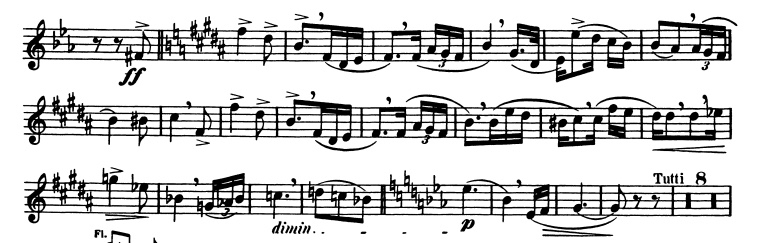

Third Movement: Allegro
A 6/8 rondo that brings to mind the third movement of a Mozart horn concerto.
In a letter that Richard Strauss’s sister sent to the legendary horn player Dennis Brain, she described how their father Franz had struggled greatly with the high E-flat — the highest note in the concerto. Could this have been an 18-year-old’s musical act of revenge against the strict father who kept him in line? Listening with that thought in mind makes it all the more fun.

Score excerpt source:
https://www.hornmatters.com/