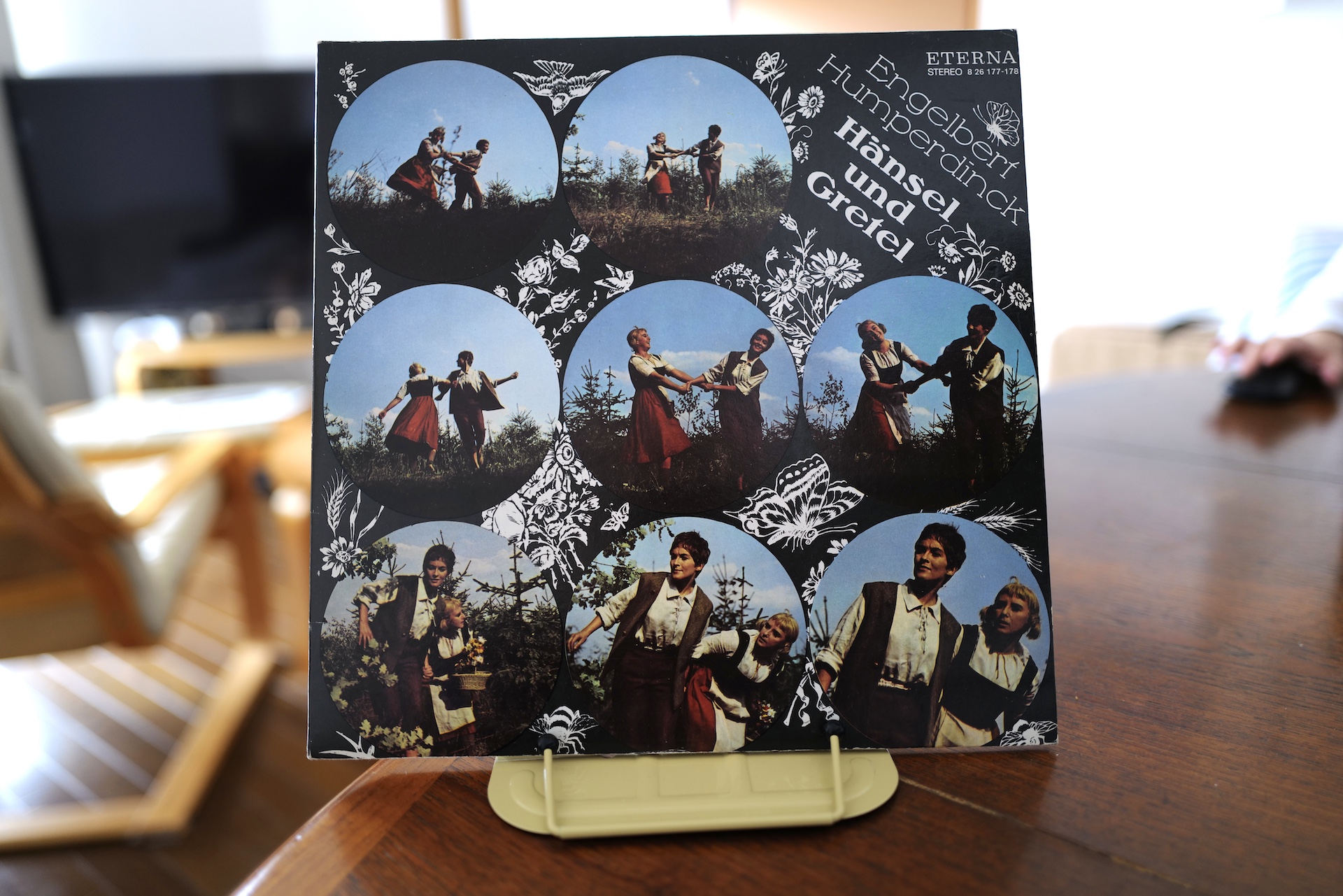
I pick records from the library based on whatever mood strikes me, so the order is not a ranking. It is nearly impossible to rank Peter Damm’s recordings against one another. Imagine a mountain with a flat summit, where countless Peter Damm masterperformances bloom like a field of wildflowers. Which flower to pick from my Master’s library is entirely up to the mood of the day.
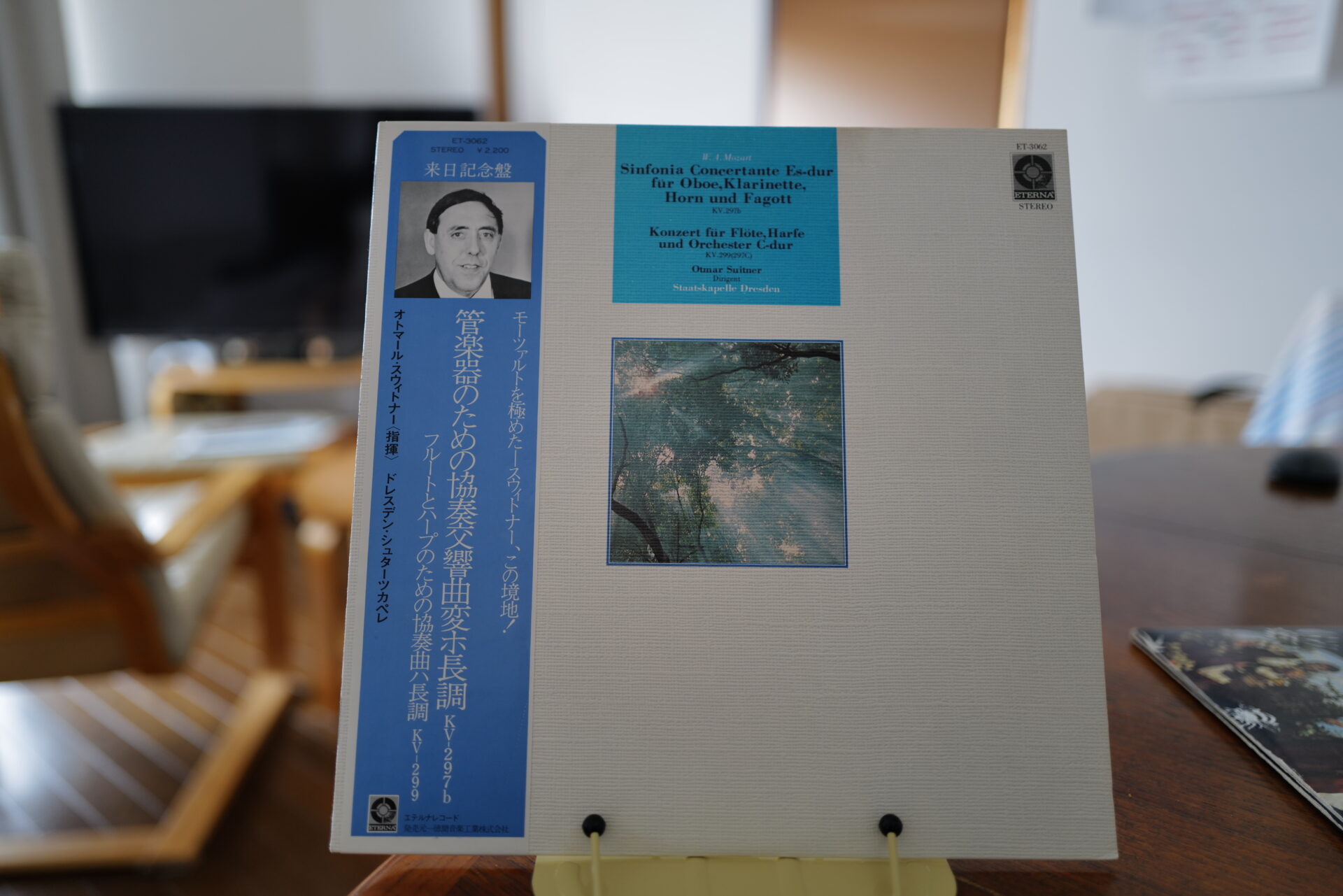
Today I would like to introduce a recording where the “Damm flavour” comes through beautifully as a hidden ingredient. It is Mozart’s beloved “Concerto for Flute and Harp in C major, KV 299.”
Peter Damm Is Here! | About the Performers and Recording
Flute: Johannes Walter
Harp: Jutta Zoff
Orchestra: Staatskapelle Dresden
Conductor: Otmar Suitner
Recording Engineer: Horst Kunze
Recording Venue: Studio Lukaskirche
Recorded: March 1975 (Peter Damm, age 37)
The conductor is Otmar Suitner, a distinguished maestro well known in Japan. You may be wondering, “But Peter Damm’s name is nowhere on the label!” — and you would be right. That is precisely the point. This time I want to introduce Peter Damm not as a soloist or chamber musician, but as an orchestral player.
Flautist Johannes Walter was born in 1937, the same year as Peter Damm.
Apart from the solo flute and harp, the scoring calls only for strings and two horns and two oboes. I would love to talk about the recording engineer and venue another time, but for now let me focus on the music and the performance itself.
About the Music
The concerto was originally composed for an aristocratic father who played the flute as a hobby and his daughter who played the harp. Mozart wrote it to be accessible for the two of them, given the limitations of the instruments of the day and the players’ apparently modest abilities — yet that very simplicity only serves to heighten the beauty of the music.
My Master knows from experience as a student part-timer just how heavy a harp is to carry, but has no idea how difficult it is to actually play. Listening to this recording, though, it is clear this is no easy piece — so perhaps that young lady was quite a fine harpist after all.
In any case, there is no doubt that this masterpiece has been handed down to posterity thanks to that amateur father-and-daughter duo.

The second movement even appears in the film “Amadeus”!

Yes — that scene where Salieri turns the pages of the score and is forced to confront his own limitations.
The Accompanying Horn Sings! | Highlights to Listen For
First Movement
A piece that opens with bright arpeggios in C major — perfect for a morning listen.
From the very introduction, as the violins descend with the phrase “C, B, A, G-F-E,” Peter Damm is already singing beneath them with vibrato on his sustained note. That is Peter Damm for you. Most players would simply hold the note straight without vibrato. In that single moment, everything Peter Damm stands for seems to be distilled.
His love of music, the joy of playing in an orchestra, the sheer delight of being alive — all of it expressed through the sound of a horn. The orchestra responds in kind, swept up in spite of itself. A magnificent performance that shows just how profoundly a horn can move an entire orchestra.

Second Movement
The wind instruments take a rest in this movement. With only strings accompanying, Peter Damm has no part to play. Yet even without him, it is a superb performance — Walter’s beautiful flute and Zoff’s sparkling harp speak for themselves.

Third Movement
The wind instruments return, and the horn and oboes sing in dialogue with the solo flute and harp. It feels almost like listening to a “Concerto for Flute, Harp, Horn and Oboe.” I often find myself so captivated by Damm’s playing that I suddenly think, “Oh right — there was a flute here too.”
I hope you will listen to this beloved Mozart masterpiece carried along on the sound of Peter Damm’s horn.

Even in the accompaniment, the energy is off the charts!
That “Damm flavour” is really working its magic as the secret ingredient!
“`